

Admission, revocation, and retained copies
Blocking a new public version and removing an existing private copy are separate operations.
On this page
Where a rule applies#
| Policy phase | What it controls |
|---|---|
| Admission | Public listings, public artifact requests, and worker re-admission before mirror writes. |
| Revocation | Whether cleanup can remove an already-stored version. |
An admission-only deny leaves stored copies readable through trusted private access. A deny applying to both phases can authorise removal when it becomes decisive.
New rules apply to both phases unless narrowed. The shipped npm install-script deny is admission-only.
No allow does not mean delete#
Public admission denies when no rule allows the version. Cleanup keeps the stored version unless a named deny decides.
Removing an allow therefore does not itself revoke a copy. If that removal exposes a winning revocation deny, normal cleanup can apply.
Unavailable evidence never supplies deletion authority. Consent, first-party protection, backend capabilities, and deletion caps still apply.
A mirror deletion is not the whole removal#
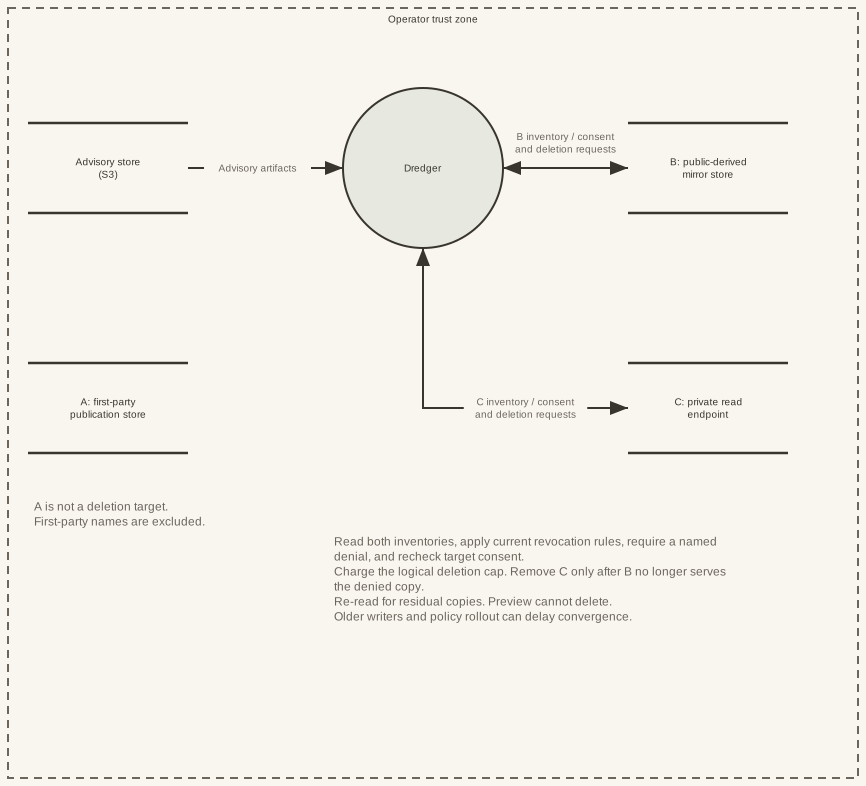
A private read repository can retain a cached copy after the mirror loses its source. Cleanup must remove eligible copies from both repositories.
Verify both inventories and authorised reads. An access error is not evidence that a package is absent.
Installed files and client caches remain outside registry revocation.
Policy changes take time to converge#
A worker still running the old policy can publish a version the updated proxy denies. That copy then uses the trusted private path.
When tightening policy, update admission and writer roles before cleanup. When relaxing a deny, update cleanup before writers rely on the new permission.
When adding an EPSS-dependent rule, prepare the advisory publisher first. Verify every role's intended policy and let older writes settle before concluding that removal is complete.
NextRemove blocked packages